|
|
|
 |
|
|
|
 |
Slabjacking, Concrete Mudjacking & Concrete Repair
|
|
Question:
"My foundation is sinking and tilting. Can slab jacking help?"
Answer:
Slab jacking looks deceptively simple, and to many homeowners it appears to be the "magic bullet" they need to repair their foundations. Imagine something heavy -- a boat in drydock. Resting, it weighs several thousand pounds. Your objective is to raise it three feet. Since you do not happen to have a crane handy, the simple approach is to put water under it. It floats, raises, and you are done. You have lifted a heavy object hydraulically.
Raising a concrete slab is not exactly the same, but close enough for our comparison. You may have a concrete slab patio, driveway, or portion of a house foundation that has sunken or tilted over the years.
In the example of the house foundation, if the house was built over a crawlspace or basement, it is possible to get into the crawlspace or basement to insert jacks and raise the foundation. But it is impossible to get under concrete slabs. So, a cement "cocktail" is squirted through holes in the concrete, which raises the foundation. Caution: slab jacking is not intended to raise or re-level entire houses. It is more intended for portions of slab foundations, garage floors, sidewalks, patios, driveways, etc.
Why Concrete Slabs Sink or Tilt
Before understanding slabjacking, you need to understand why concrete slabs fail. Traditionally, houses were built over a crawlspace or basement--the flooring was raised over ground-level. But as concrete became a predominant building material, concrete slabs became the vogue. In simple terms, sheets of concrete were poured at grade, and this became the level for the house's flooring.
Soil is not a stable thing. Other materials -- rock, gravel, ash, sand, etc.--are far more stable. Also, soil can have empty spaces within it. If you have ever worked in a garden, you know this. As the years go by, those empty spaces allow the soil base to shift and compact. But often in ways that you don't want.
-
Concrete Slabjacking
-
Concrete Lifting
-
Concret eRepair
-
Foundation Piering and Foundation Repair
-
Concrete Installation
|
|
Concrete Repair, Mudjacking, Concrete Lifting, Slabjacking Contractors in Rockford, Illinois
|
|
|
|
Certified by The American Pressure Grouting & Mudjacking Association

Angie's List

Merchant Circle
Slab Jacking to Repair Concrete Slabs
Here's how concrete slab jacking works:
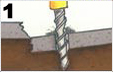
1) A series of holes, about a half-inch in diameter, are drilled in the concrete slab. If you have ever injected insulation into your walls, or at least know the process, you will know that many holes are required. It's the same thing with slabjacking. One hole will not suffice.
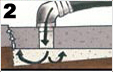
2) A "cocktail" of stable materials, such as sand, gravel, and ash, along with water, is injected into the holes.
3) The slab slowly raises.
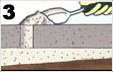
4) The holes are plugged
|
|
|
|
|
|
|
 |
|
|
 |
|
concrete, driveways, parking lots, rockford, driveway, driveways, drive-way, parking-lot, concrete lifting, concrete repair, mudjacking, slabjacking, concrete pouring, pouring, repairs, maintenance, contractors, midwest, illinois, wisconsin, chicago, northwest indiana, rockford, janesville, beloit, madison, freeport, cement, sidewalks, overlay, pavement, property, management, gravel, sand, grading, rock, trucking, hauling, replace, remove, install, stone, base, excavating, design, layout, proposal, estimate, bid, garage entrance, street entrance, curb, gutter, porch, stoop, steps, chamber of commerce, construction, Rockford concrete contractor, concrete contractors in Rockford, Rockford concrete companies, concrete repair contractors Rockford
|
|
|
|
|